
I just got back from another trip with my parents, and it reminded me how much better family travel gets when you stop treating it like a high-speed vacation and start treating it as an exercise in slow, intentional living.
Traveling with your parents as an adult is a truly special opportunity. While traveling with your parents in your 20s often triggers old teenage dynamics, reaching your 30s shifts everything. You aren't just traveling with "Mom and Dad"—you’re traveling with two distinct adult human beings who are aging, living their own lives, and navigating the world right alongside you.
I’m 33, my brother is 40, and we regularly travel with our parents (ages 68 and 78). Over years of slow travel together, we’ve developed practical boundaries to keep the peace and build real memories. Here are three essential rules for traveling with your parents as an adult—covering accommodation etiquette, financial boundaries, and letting go of control.
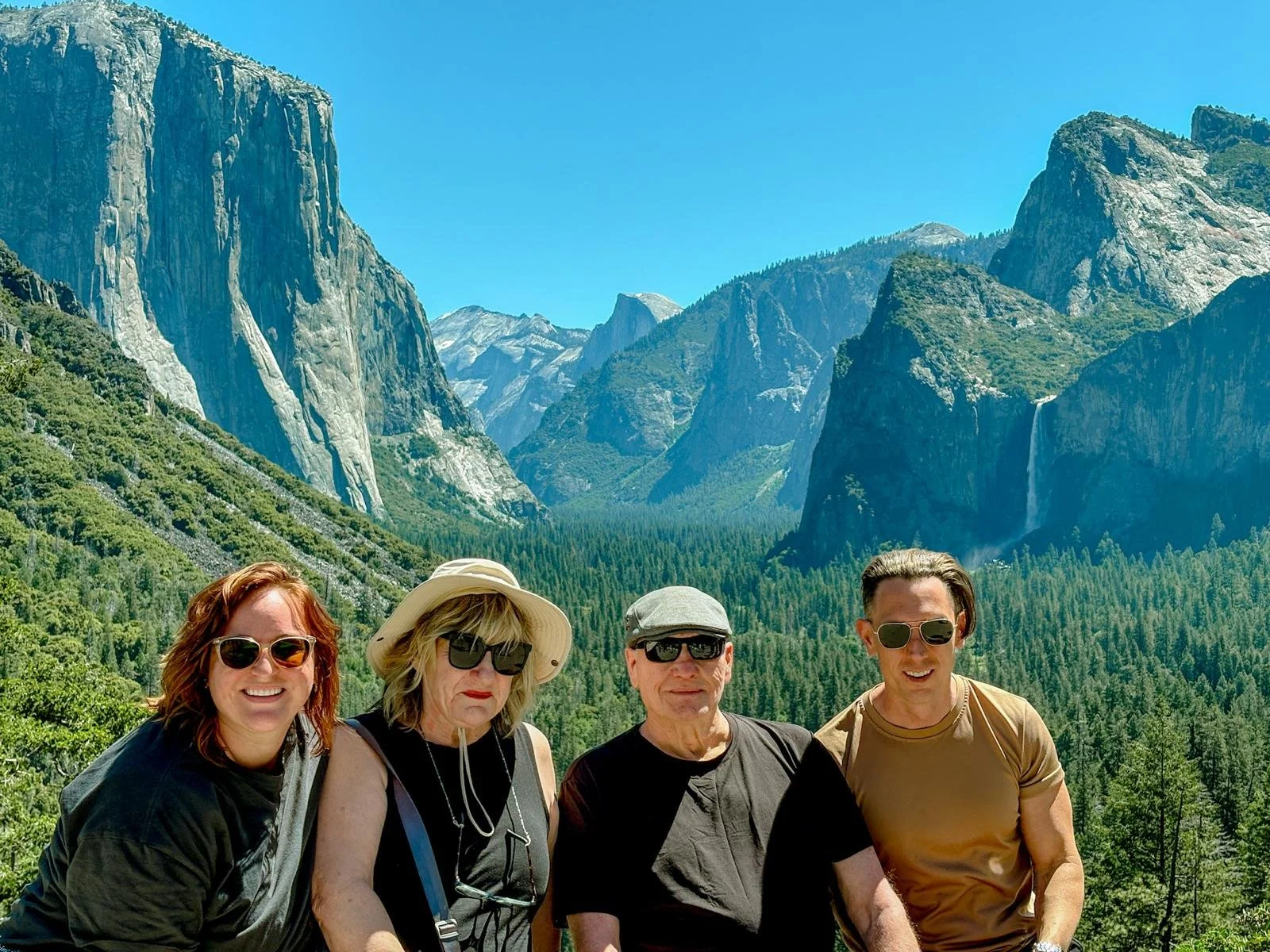
My family’s most recent trip to yosemite national park
KEY TAKEAWAYS FOR ADULT FAMILY TRAVEL
Protect Personal Space: Avoid shared bedrooms; book separate rooms so everyone has time to decompress.
Set Upfront Financial Expectations: Establish clear room-splitting arrangements and budget expectations before booking.
Trade Checklist for Slow Pacing: Anchor your days with 1–2 main activities, double your transit buffers, and invest in physical comfort.
Stop Over-Parenting: Respect your parents as capable adults by sharing loose itineraries, stepping back, and letting them contribute.
Protect Everyone's Personal Space & Set Financial Boundaries
When you’re a child, fitting the whole family into a double-queen hotel room was standard. At 33? It’s a recipe for burnout and resentment. Everyone needs a chance to decompress alone at the end of the day. Whether that means booking separate hotel rooms or ensuring a multi-bedroom Airbnb, personal space keeps the peace.
My brother and I often share a room when necessary, but for trips longer than 4 days, I prioritize accommodations with separate bedrooms so everyone gets proper rest and space to get ready.
Establishing Clear Financial Boundaries
Along with physical space, clear financial agreements prevent unspoken awkwardness:
The Split-Room Pact: Early on, I agreed with my parents that if we booked a layout with my own room, I'd pay my share (⅓ for me, ⅔ for them).
The Pull-Out Couch Rule: If I was sleeping on a pull-out couch in the common area, I didn't contribute to accommodation fees.
Now, my parents graciously offer to cover shared accommodations when the four of us travel together. Regardless of who pays, discuss budgets, room allocation, and splits explicitly before hitting "confirm booking."
Trade Checklists for Physical Comfort and Time Buffers
Avoid 10-stop-a-day itineraries that make you sprint through airport terminals. Multigenerational slow travel means investing in physical comfort where it counts—renting a slightly larger car, choosing reasonable layovers, and selecting comfortable seats.
Most importantly: double your time buffers. Add 30 extra minutes at the airport, plan for frequent rest breaks, and pick just one or two main "anchor" activities per day.

While my brother and I did white water rapids, our parents chilled back at the airbnb
Our family recently traveled to Yosemite and Sequoia National Park together. In Yosemite, my brother and I scheduled a full-day river rafting trip while my parents explored Mariposa at their own pace. Later in Three Rivers, we spent an entire day relaxing: brunch in town, poolside lounging, and cooking dinner at the Airbnb.
That deliberate pacing lets us enjoy being together without getting exhausted. It’s about the quality of the shared experience, not checking off tourist sights.
Stop Over-Parenting Your Parents (And Let Go of Control)
As recovering overachievers, it is easy to step in and manage every variable—carrying every bag, picking every restaurant, and dictating every schedule. But your parents are capable adults moving at a different pace.
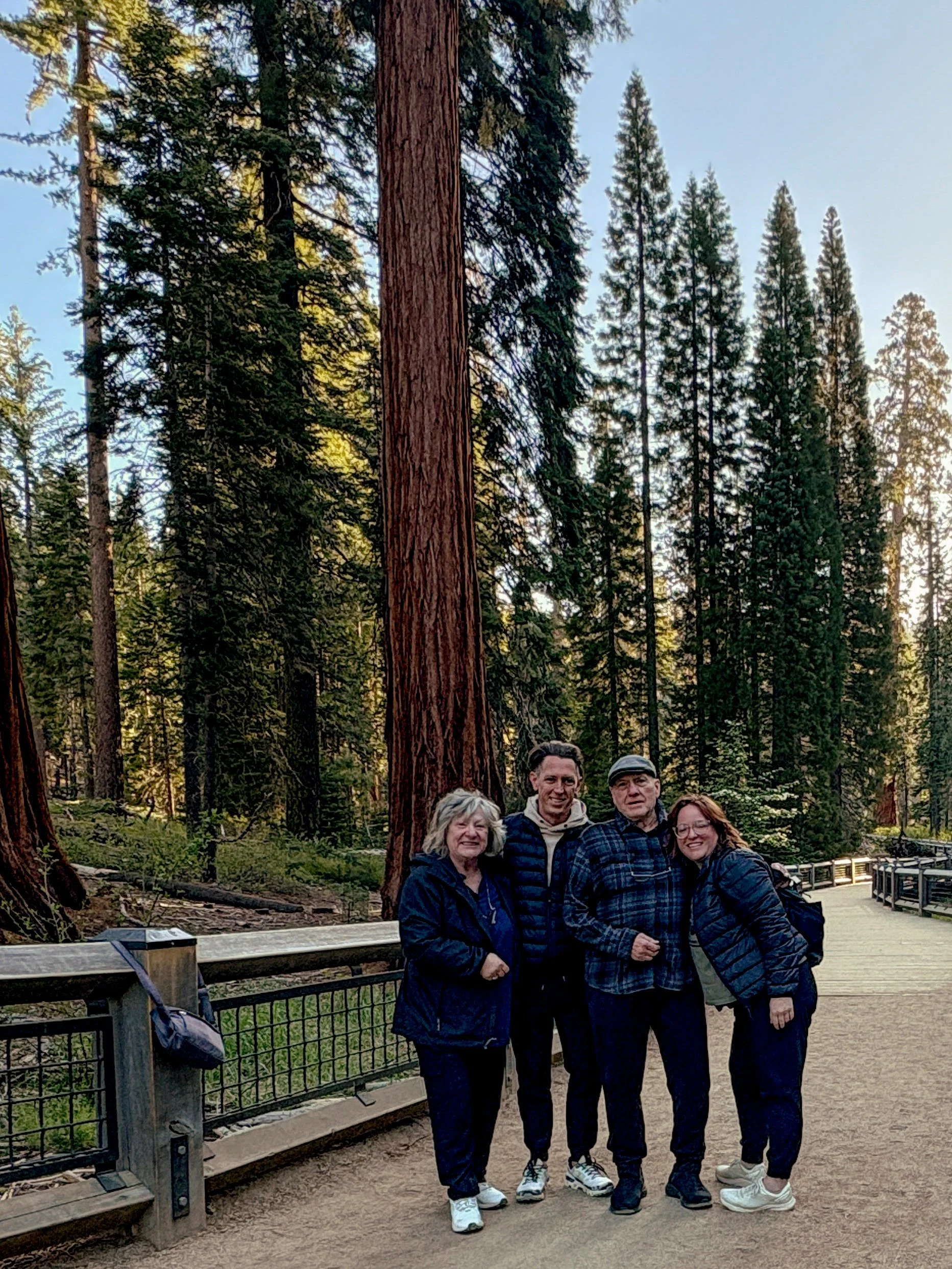
Exploring Mariposa Grove alone in Yosemite National Park
Send them a loose outline ahead of time via text or email so they feel included, but then step back. Let them choose dinner spots or lead a morning walk. Meeting your parents as peers—rather than managing them or slipping into childhood roles—is one of the most rewarding parts of adult family travel.
A Favorite Memory: Because my dad has a handicap placard, we could drive straight up to Mariposa Grove in Yosemite before the public shuttles started running. We had the giant sequoias to ourselves for an hour in total quiet. I looked over at my dad as he whispered, "I never thought I would get to see these trees in person."
Remember: your parents are experiencing life for the first time, too. Letting go of rigid control creates space for those quiet, unforgettable moments.
Frequently Asked Questions About Traveling With Your Parents
-
Prioritize separate bedrooms whenever possible—either by booking individual hotel rooms or selecting a multi-bedroom Airbnb. Having private space to decompress at the end of the day is key to preventing burnout and maintaining healthy adult boundaries.
-
Discuss financial arrangements explicitly before booking. A simple rule of thumb: if you get your own private bedroom, split accommodation costs proportionally (e.g., one-third for you, two-thirds for your parents). If you are sleeping in a shared space or pull-out couch, agree that you don't contribute to the room cost. Other questions to discuss: how to split the rental car and gas, and how to split meals.
For my family: we take turns with gas, our parents handle the rental car (I drive), we each usually cover our own meals (though sometimes our parents will get us dinner a couple of times), and we each cover our own airfare and souvenir purchases. -
Slow down your pacing by choosing only 1–2 anchor activities per day, doubling your transit buffers, and investing in physical comfort (like larger rental cars or reasonable flight layovers). Most importantly, step back, share a loose itinerary ahead of time, and treat your parents as capable adult peers rather than managing every detail.
