
How I Found Community After Burnout (By Taking a Pottery Class)
Field Notes is a year-long research project documenting what actually happens when you stop waiting for someday and start experimenting with joy.
Welcome to Field Notes 001: Pottery
Creativity Won't Save You
I spent a year wanting to take a pottery class. But I found myself constantly saying work was too much, or the timing was never right.
EVERY 👏 FREAKING 👏 EXCUSE
Then I got laid off, and suddenly I’d run out of reasons not to show up.
My want for 2026 is to add more joy back into my life, and I wanted to explore if saying yes to creative expression helps me build self-trust and cultivate joy, regardless of skill level or outcome.
Spoiler: it wasn’t pottery that built joy and self-trust.
Pottery was jumping headfirst into dealing with my perfectionism. In corporate, output is measurable and goals are trackable. Pottery is the opposite. I cannot optimize the clay. I can’t achieve perfection. I do not know if a bowl will crack, how the glazes will work together, or if this tray will be truly functional. The clay is the master, I am not. This six-week pottery course was a radical act for a former perfectionist and overachiever. There was no way I was going to be perfect. All I could measure was if I was having fun, and I was.
Here’s what I learned from the clay…
What Screen-Free Time Actually Does to a Burned-Out Brain
For two hours each week, I had a dedicated screen-free time. You can’t scroll with clay caked to your hands, and you certainly can’t multitask while building a coffee mug. My phone hovered near me for the first couple of classes, then quietly moved to my back pocket, and eventually I stopped noticing it at all.
Most of my evenings before pottery looked the same: I’d decompress by scrolling. Instagram to Threads, Threads to Pinterest, Pinterest to YouTube. I told myself I was unwinding, but I was making it worse. I was too in my head, searching for something to quiet the low hum of uneasiness, and those videos never did.
Researcher Austin Ward found that when people blocked mobile internet on their phones, they naturally spent more time in nature, socializing, and doing hobbies. For those two hours, all three were true. Let’s call clay the nature, I mean, it basically is. I was socializing with a group of people from every walk of life. And I was finally making room for a hobby. After my class, I’d float home on the drive back; there was a new buzz—an overall well-being.
My clay became my phone. Instead of scrolling, I was molding. I got to manipulate the clay the way the algorithms usually manipulate me.
And here’s the thing, research backed up what I was feeling. You can draw a direct correlation between creativity and your well-being.
Was that buzzing sensation the feeling of joy?
What Happens When a Control Freak Takes a Pottery Class
Pottery taught me patience. In corporate life, numbers and output needed to be explained immediately — pottery said wait. The clay needed to dry before it could be glazed, before it could sit in the kiln, before I could see what I’d actually made. It was freeing, but not without my perfectionism showing up uninvited, especially when we were told what to make.
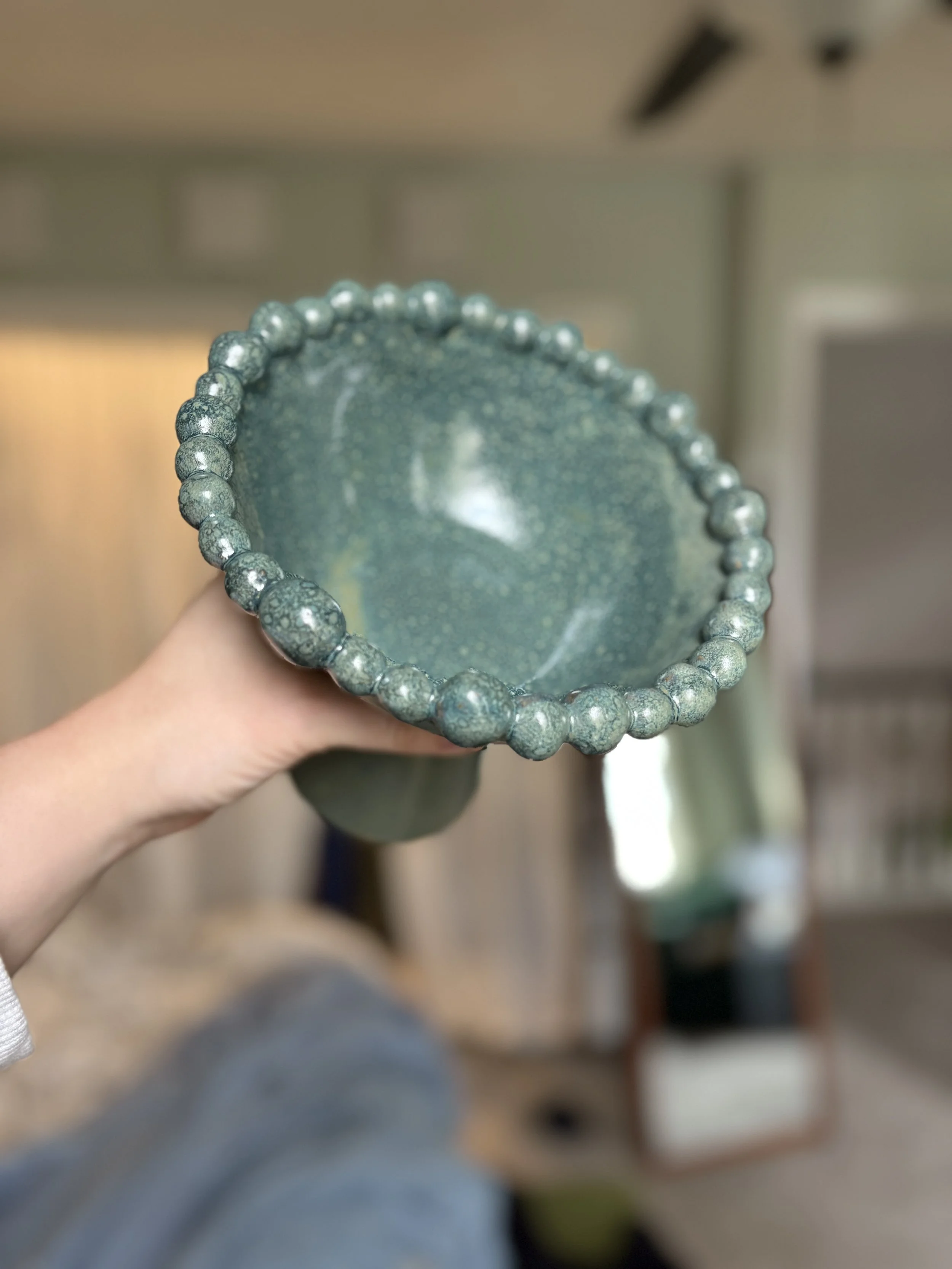
The first class began with the instructor telling us what to create. My first piece had these bubbles — balls, really — all around the rim. Was it a fruit basket? A key drop? I had no idea. But we’d giggle every time our instructor pushed us to make more bubbles in her thick Eastern European accent. She wanted very specifically shaped bubbles, and I could feel my perfectionism quietly twitching.
I didn’t love what we were making, but I learned to trust the process. Until it came time to glaze it.
I wanted green. I wanted to dunk it in the big bucket of soupy glaze color. My instructor advised against it. I didn’t listen. When I came to collect my first piece, I gasped in horror, then immediately started giggling. It was ARMY TANK GREEN. Horrific, bland, dirty green. No depth. Just disgusting. I’d picked one color, played it safe, ignored the advice, and it came out completely flat.
My instructor saw it differently. She re-glazed it, turning it into something with depth and movement. Something I actually wanted to keep.
Looking back, I don’t think I hated being told what to make. I think I hated how unfamiliar it felt to have one clear voice giving me direction and enough quiet to actually hear it.
In corporate, I was handed briefs, deadlines, and someone else’s vision to execute. I spent years bending my creativity to fit a mold, eliminating myself from my own work, then being left to explain the outcomes to clients as if I’d believed in them all along. It made me want to rage.
Because in those final months before my layoff, my creative process didn’t look anything like a pottery studio. It looked like fifteen people in a room, all vying to have their idea make the final cut. And I understood why — adding your idea makes you feel important, needed, valued. I get it. I wanted that too. But I was the one responsible for making it all coherent, for pleasing the client, the leadership, the person writing my review in a few weeks. I couldn’t hear my own discernment anymore. There was too much noise, and I had lost the plot completely.
And I have to be honest, I wasn’t innocent in it. I was moving at hyper speed because I felt out of control. Caring for my mother, being dangled potential leadership opportunities, and in the same breath being told that I wasn’t stepping up enough. I had no one in my corner, so I became a rabid dog. Barking, but terrified. I gave too much of myself to people who didn’t matter and had nothing left for the ones who did, including myself.
Mila, my instructor, didn’t have fifteen opinions. She had one, and she offered it quietly. I ignored it anyway, went army tank green, and learned something. In the studio, mistakes were just the beginning of the next attempt. She picked up my ugly bowl without being asked and made it better. No noise, no politics, no one keeping score.
Pottery didn’t just teach me to trust an instructor; it taught me to trust myself. It held up a mirror and showed me how burned out and brittle I’d become and how much quieter life could feel when I stopped trying to manage everyone else’s need to be heard.
I was the mountain standing in the way of me and my peace.
How I Found Community After Burnout (By Accident)
I chose pottery because I wanted to test whether creative expression builds joy. What I didn’t expect was where the joy would actually come from.
In just six weeks, I found myself looking forward to each Thursday night in a way I hadn’t looked forward to anything in a long time. Not because of what I was making — bubbles, magnets, an army tank bowl — but because of who was in the room. Six women, ranging from 18 to 60, from every stage of life imaginable. And I have never giggled so much or felt so genuinely supported in my creative pursuits.
As an introvert who dreads small talk, I braced myself walking in as the new person. But there was no awkwardness, no surface-level pleasantries to wade through. We went deep immediately. I learned about daughters and sons and grandchildren, bad jobs and good jobs, health scares and great loves.
Then, one week, I had to miss class at the last minute to take my mom to the hospital. The following week, I walked in bracing for the catch-up small talk I’d been dreading. Instead, my instructor dropped her conversation mid-sentence and threw her arms around me and whispered.
“Oh Renée, we missed you. Are you okay? Is your family okay?”
I can’t remember the last time I was hugged by someone who wasn’t family.
As the course came to an end, I decided to skip the next session. It was partly financial, but mostly I wanted to make sure I was coming back because I genuinely wanted to — not just because it was on the research calendar. I needed to know the difference.
When I told the group I’d be sitting the next one out, one of the women leaned over and said, “Don’t worry sweetheart, we’ll be here ready to welcome you when you come back.”
I drove home thinking about that. To be welcomed back somewhere before you’ve even left. To have people hold a seat for you without needing a reason. I went in looking for joy through creativity and found it in the people instead.
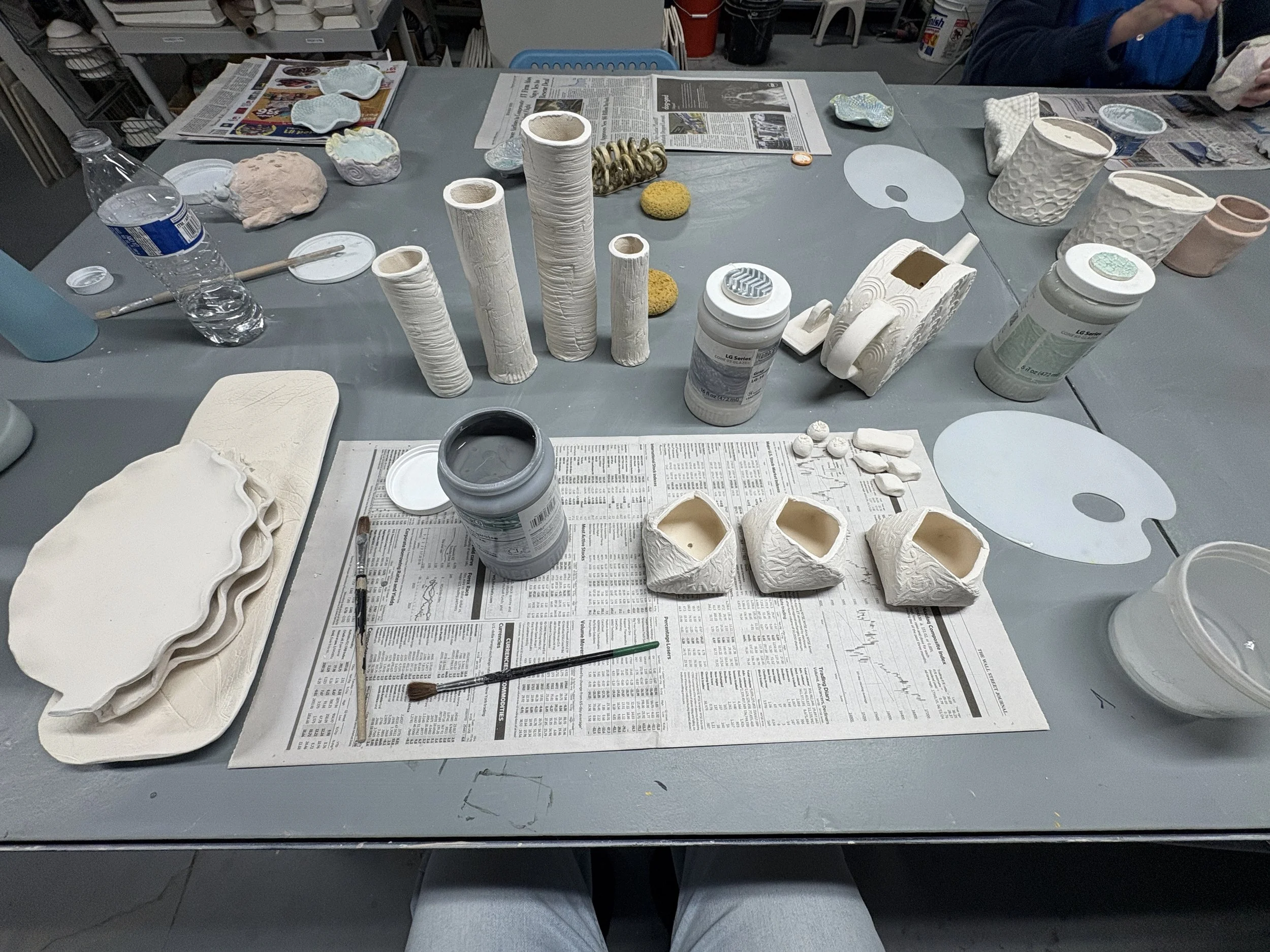
Why Finding Community as an Adult Feels Impossible Right Now
My assumption going in was that saying yes to creative expression I’d postponed would build self-trust and contribute to joy, regardless of skill level or outcome. But it was the community inside it that brought me joy, and I hadn't seen that coming.
The Harvard Study of Adult Development — one of the longest-running studies on human happiness — found that close relationships, more than money or fame, are what keep people happy throughout their lives. And yet it’s harder than ever to actually find those relationships as an adult.
In 2024, 17% of Americans reported having no close friends, which is up from 1% in 1990. Strong social connections are consistently linked to better physical and mental health, while isolation has been tied to depression, anxiety, and cardiovascular disease. The U.S. Surgeon General has gone as far as to say that loneliness is as damaging to our health as smoking fifteen cigarettes a day.
So, how do we actually meet people as adults?
Sociologist Ray Oldenburg coined the term “third spaces” — places beyond work (2nd space) and home (first space) where we interact freely and casually. Think pottery studios, community centers, theatre classes, local libraries, group volunteering, coffee shops, faith communities. The places where you just... show up, and so does someone else, and something builds over time.
As adults, we lose those natural collision points. We stop running into the same faces every day. The scaffolding that once held community in place — school, dorms, shared routines — quietly disappears. When I think about the last time I had a real community outside of work or home, I land on college. I was a part of a small campus and an even smaller sorority, different people but with a shared thread. We lived close to each other, had structure but real freedom, not yet carrying the weight of corporate burnout or a calendar that belongs to everyone else. That’s why so many of us look back on those years with such specific tenderness. Not because they were perfect, but because community was just built in.
Third spaces are disappearing, squeezed out by rising real estate costs, car-dependent suburban design, the shift to digital, design features that push you out (can I please get a cozy chair in a coffee shop), and the COVID-19 pandemic, which replaced foot traffic with DoorDash. And the spaces that remain? They cost money to be in. My pottery class was $245 for six weeks. That’s not nothing. For many people, that’s the barrier between finding their people and staying home.
Finding community as an adult is genuinely hard, expensive, and awkward. The loneliness epidemic isn't a personal failing. It's a structural one. We didn’t lose our people. We lost the places where people used to just be.
I lost my second place when I was laid off. Right now, home is the only place I have, and it’s a good one. I live with my parents. My mom is my best friend, my bonus dad makes me genuinely laugh, and my brother and I are close. I am not lonely in the way the statistics describe. I have love around me daily.
But familial love and community connection aren’t the same thing.
What the pottery studio gave me — six women from completely different ages, backgrounds, and life stages — isn’t something that happens by accident anymore. There’s something irreplaceable about connecting with people completely outside your orbit — people you would never organically find your way to. That’s what third spaces used to provide naturally. That’s what pottery gave me by accident.
What’s Coming Up: March Field Notes
The natural next step would be to go find another third space. Sign up for a class, join a club, locate the nearest pottery studio. But third spaces are dwindling. And even when they exist, they cost money, and I’m being intentional about finances. What pottery taught me is that the space was never really the point anyway. It was the people inside it. Third spaces just make it easy to find those people. Now that they’re disappearing, we have to get more intentional about the finding.
So March isn’t about locating the right room. It’s about building a web of connections that can bring me joy.
I went into pottery looking for joy through creativity. I found it through people instead. Now I want to know, can you build that intentionally? Can you manufacture the magic of a room where everyone just shows up?
And if connection is what actually cultivates joy, then the question I’m sitting with is: how do you build it when the infrastructure for it keeps shrinking?
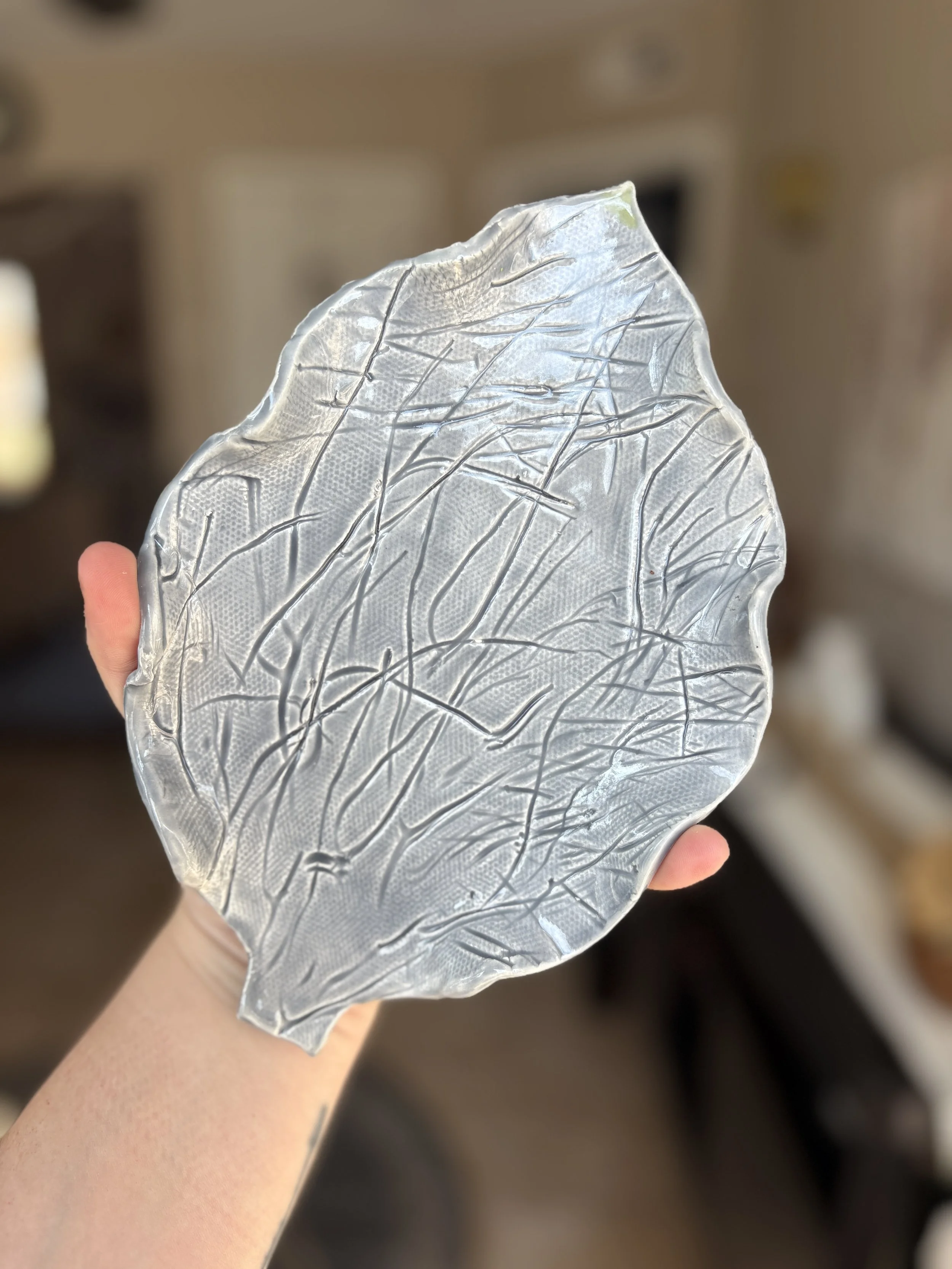
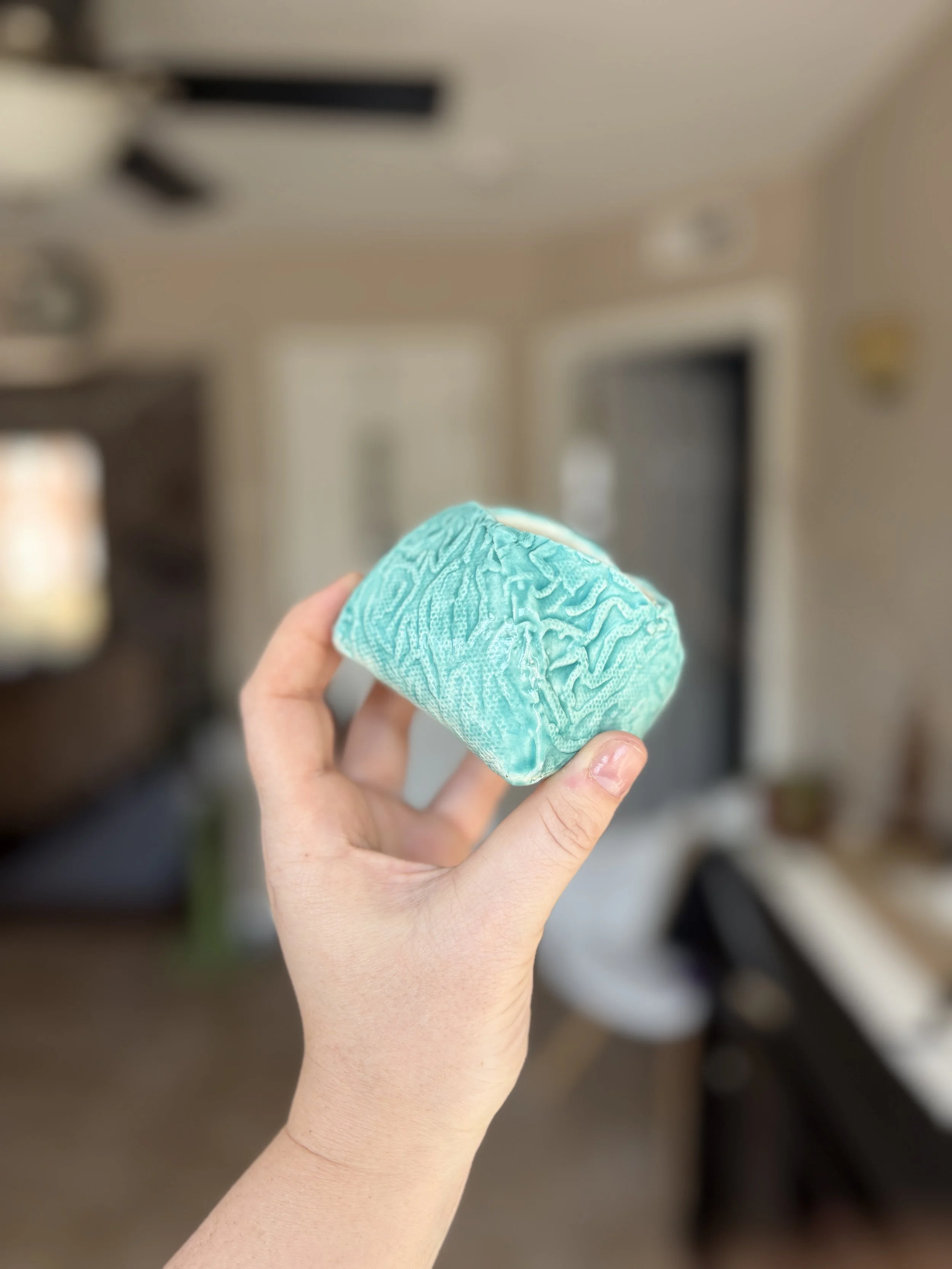
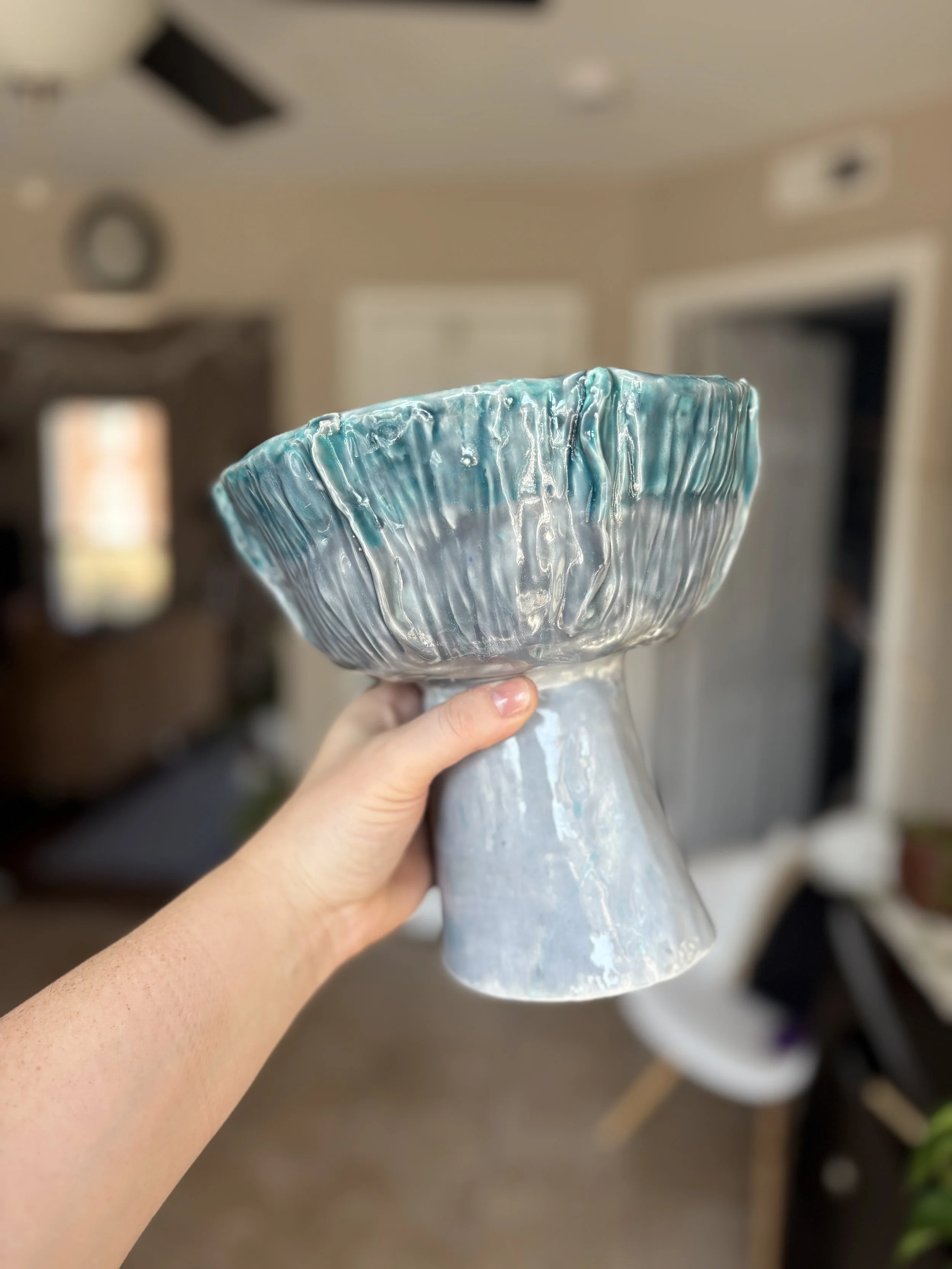
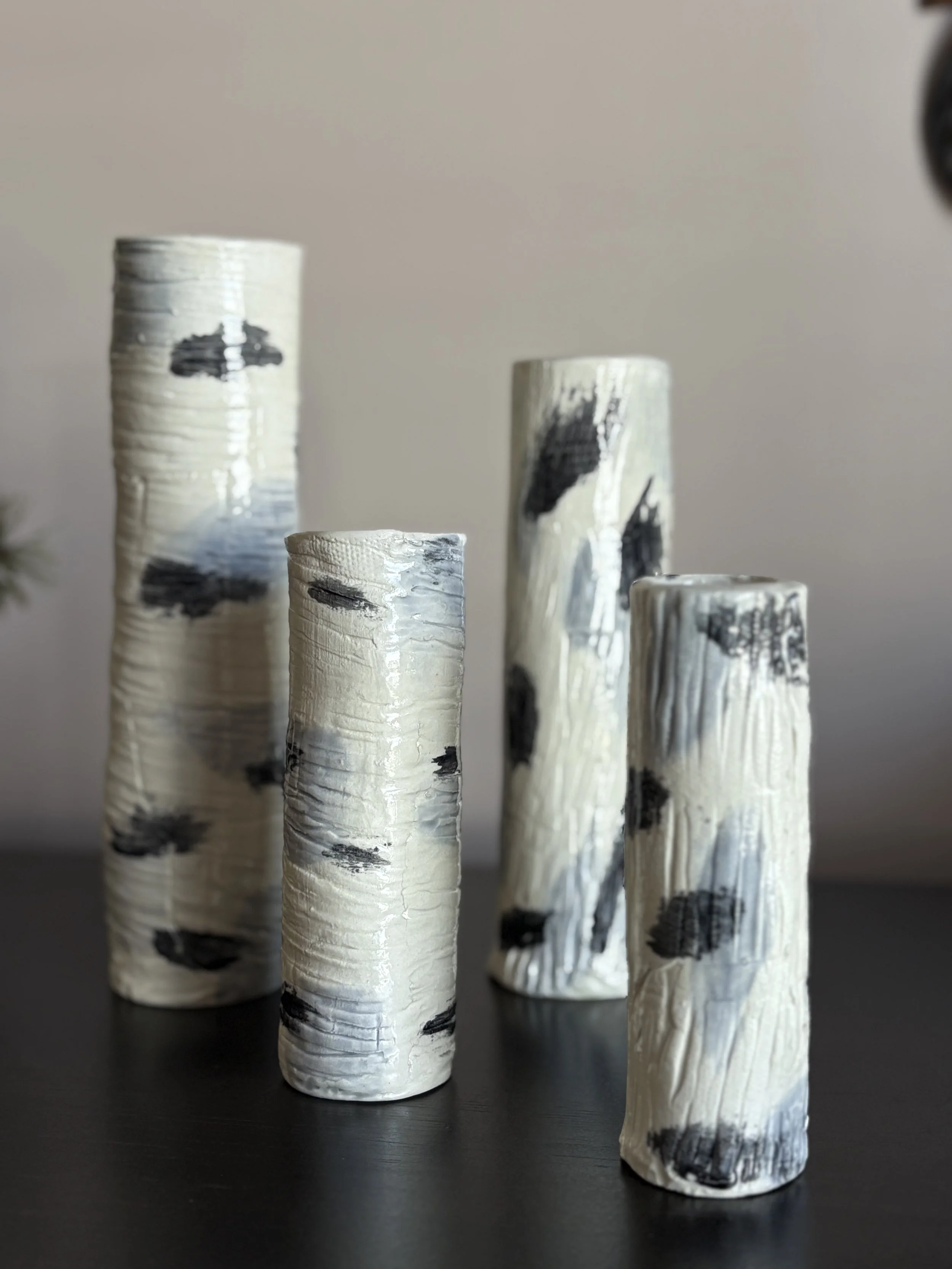
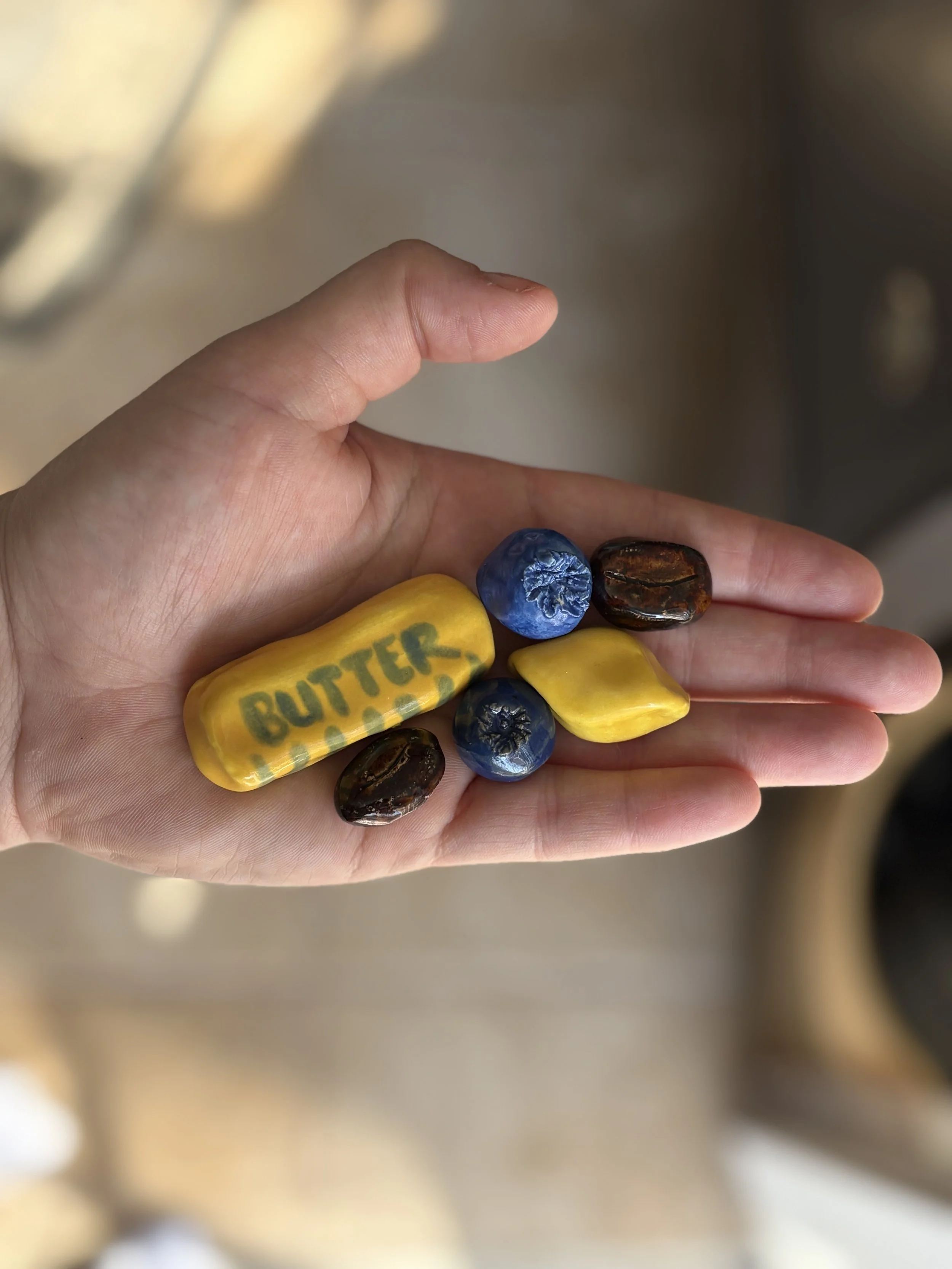
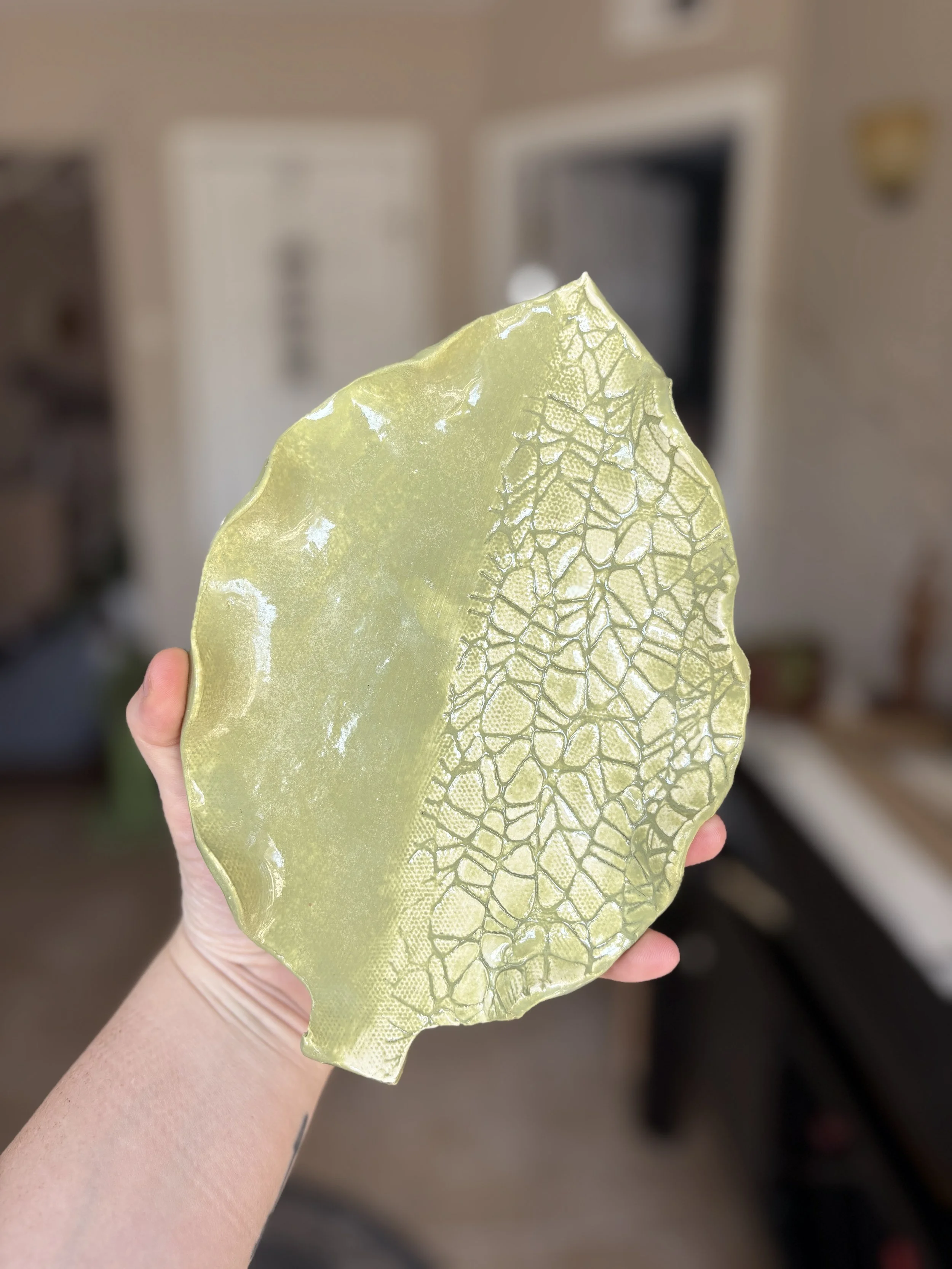
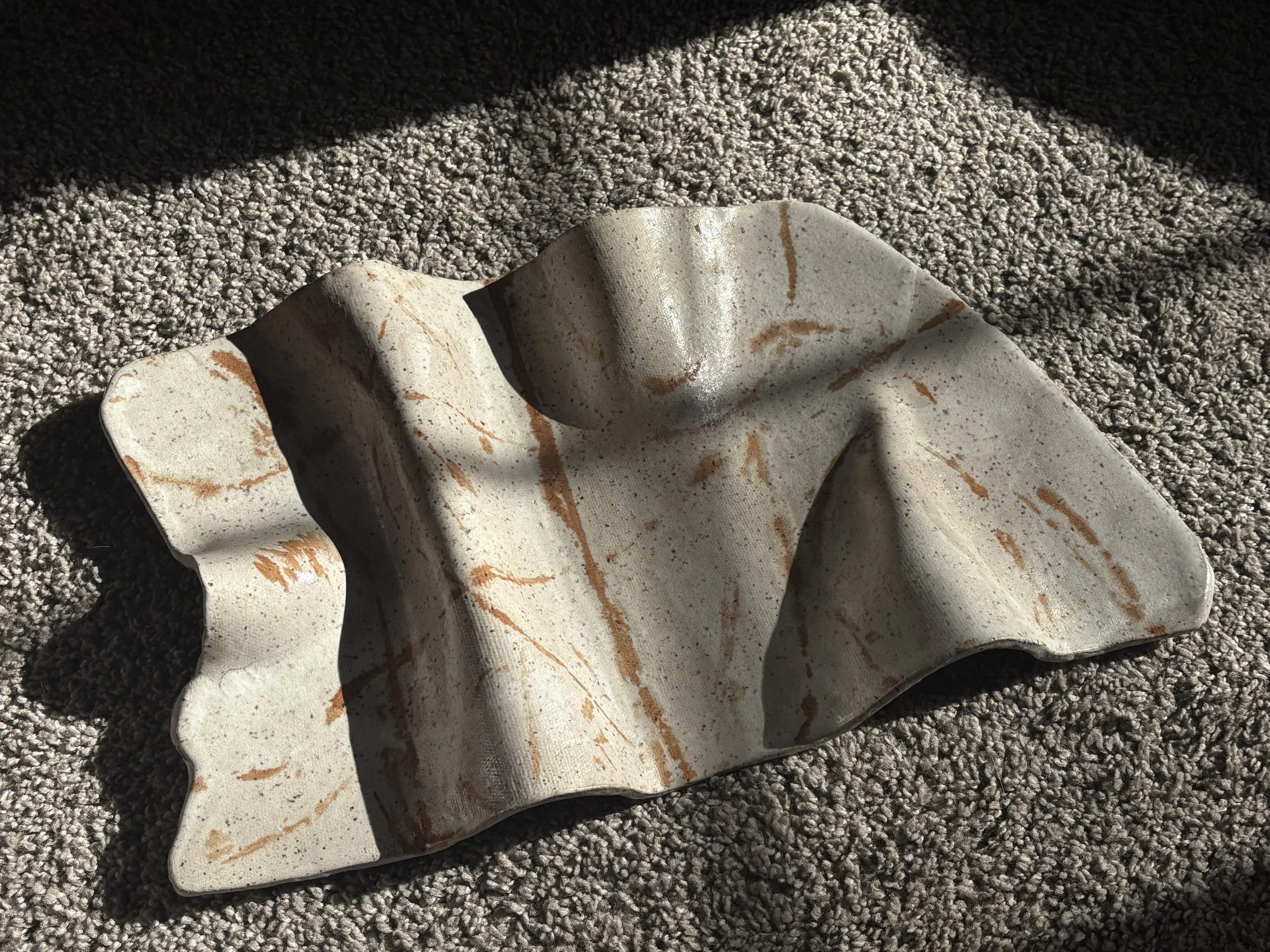
If you are curious, here are some of my favorite pieces I made.
Field Notes is a year-long research project documenting what actually happens when you stop waiting for someday and start experimenting with joy.
Check out other Field Notes ⬇️
