
Why I Never Had a Best Friend And What I Found Instead
It was my second day of study abroad in dreary, rainy England. I was getting new student IDs for a program I almost missed entirely. (Yes, I was rejected by all the original schools I applied to, but that’s a story for a different day.) The whole process was a mess: go to the library, no wait, go back to this room, get this paperwork first. I was jetlagged, annoyed, and wet. As I jumped over the library turnstiles for the second time, I stumbled into two girls.
It was 2014, and my life would be changed forever.
We became fast friends. So fast that, against my mother's advice, I moved dorm rooms in the pouring rain after knowing them for five days. Three days after that, I was inviting them to Edinburgh for my 21st birthday, where we'd meet another friend from my university.
Our time together lasted five months before we were separated across three different states — North Carolina, Texas, and Washington. We celebrated and supported each other through marriages, PhDs, children, breakups, layoffs, and cancer. Each of us walking different paths, held together by FaceTimes, handwritten letters, and visits that never felt like enough.
Then, thirteen years later, we were in the same room again.
The ease of it surprised me. You could see time on us — smile lines, grey hair, the tiredness behind our eyes, the slope of our shoulders. But the friendship hadn't aged the same way. We weren't in our 30s in that moment. We were suddenly 21 again, in a dorm hallway, and nothing had changed, but everything had.
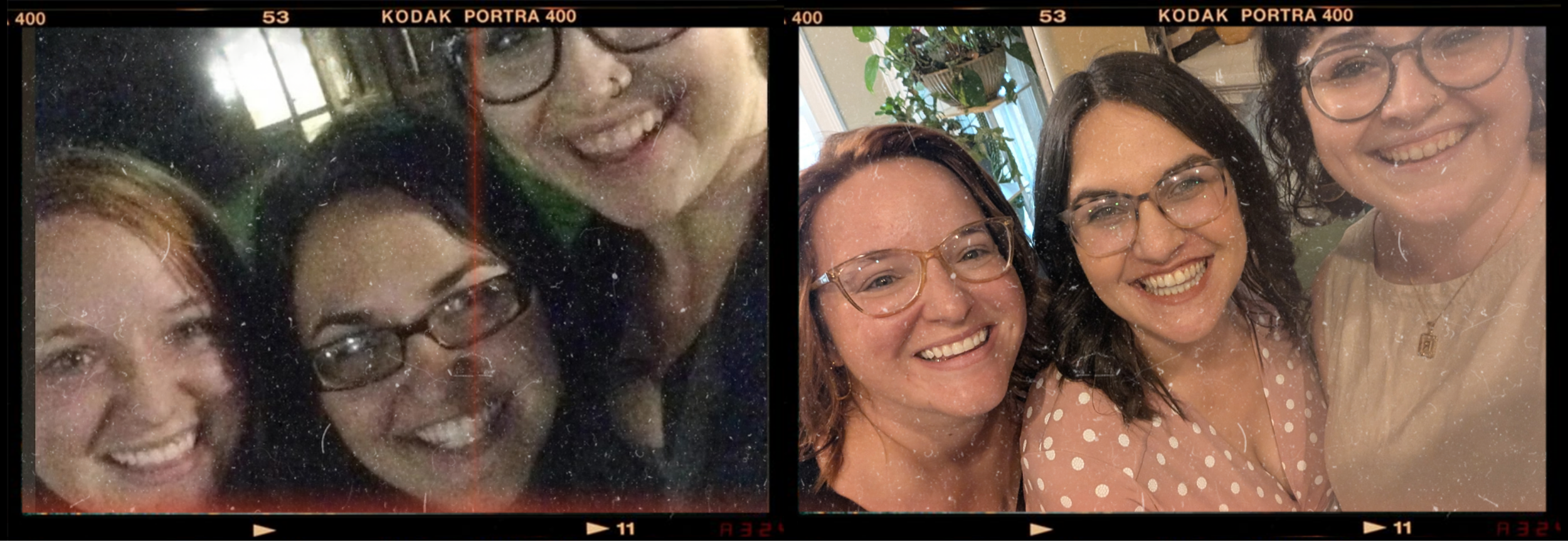
2014 and 2026. Same friendship. Completely different lives.
Why We Don't Have Words for Friendship (And Why That Matters)
In the book Friendship First, author Gyan Yankovich points out a shortcoming in the language surrounding friendship. Dating has a whole vocabulary — situationship, soulmate, fling, almost. Friendship gets: friend. Or best friend. That's it.
I struggle with the word friendships. And now at 33, I believe it comes down to the all-or-nothing words that float in the definition of friendship. The American Psychological Association defines friendship as a voluntary, mutual, and often long-lasting relationship characterized by affection, trust, and shared experiences.
The long-lasting bit, the commitment of it all. Because to me, that means all or nothing. And I’ve struggled… a lot.
My childhood best friend (we were seven) stopped talking to me for a week because I was “bossy.” We recovered and three years later, she moved away. In middle school, I had a girl at lunch tell me she and three others didn’t want to be friends with me and I should go sit somewhere else. In high school, I was a cheerleader but never quite popular, and I had one, maybe two, good friends whom I lost touch with. My college roommate ended up ghosting me – there was no big falling out, we just drifted apart, and she isn’t on social media anymore.
It can feel like I am the common denominator in all of these friendship issues. Or maybe it's just a cultural issue. I think about the media I engaged with as a kid and into my mid-twenties; the main characters had best friends: Friends, The Big Bang Theory, Hannah Montana, That’s So Raven, How I Met Your Mother, Gilmore Girls, Sex in the City.
There have been countless studies on the impact of television on tweens and young adults, and those friendships depicted in TV shows and movies significantly influence us by modeling social norms and shaping expectations of intimacy and relationships.
Seeing those friendships play out on my screen, I thought a friend was someone who lived close by, spent countless hours with, and was all or nothing. My measuring stick was the fabricated friendships I was seeing play out on the screen. It made me crave friendship bracelets, slumber parties, and passing notes in class. Something I rarely enjoyed.
Until I was 21. My study-abroad friendship looks nothing like what the screen taught me friendship should be. There is no proximity, no daily coffee runs, no being each other's plus-ones. And yet it held for 13 years, it survived long gaps and still held, which the all-or-nothing definition wouldn't account for.
So what is friendship then, if not that?
We don’t think in the liminal zone when it comes to friendships. And that is where the 90s and early 2000s media led us astray. Friendship feels like the ultimate end destination, but that isn’t the point. Friendships are for warmth, frequency, and quality, not a label.
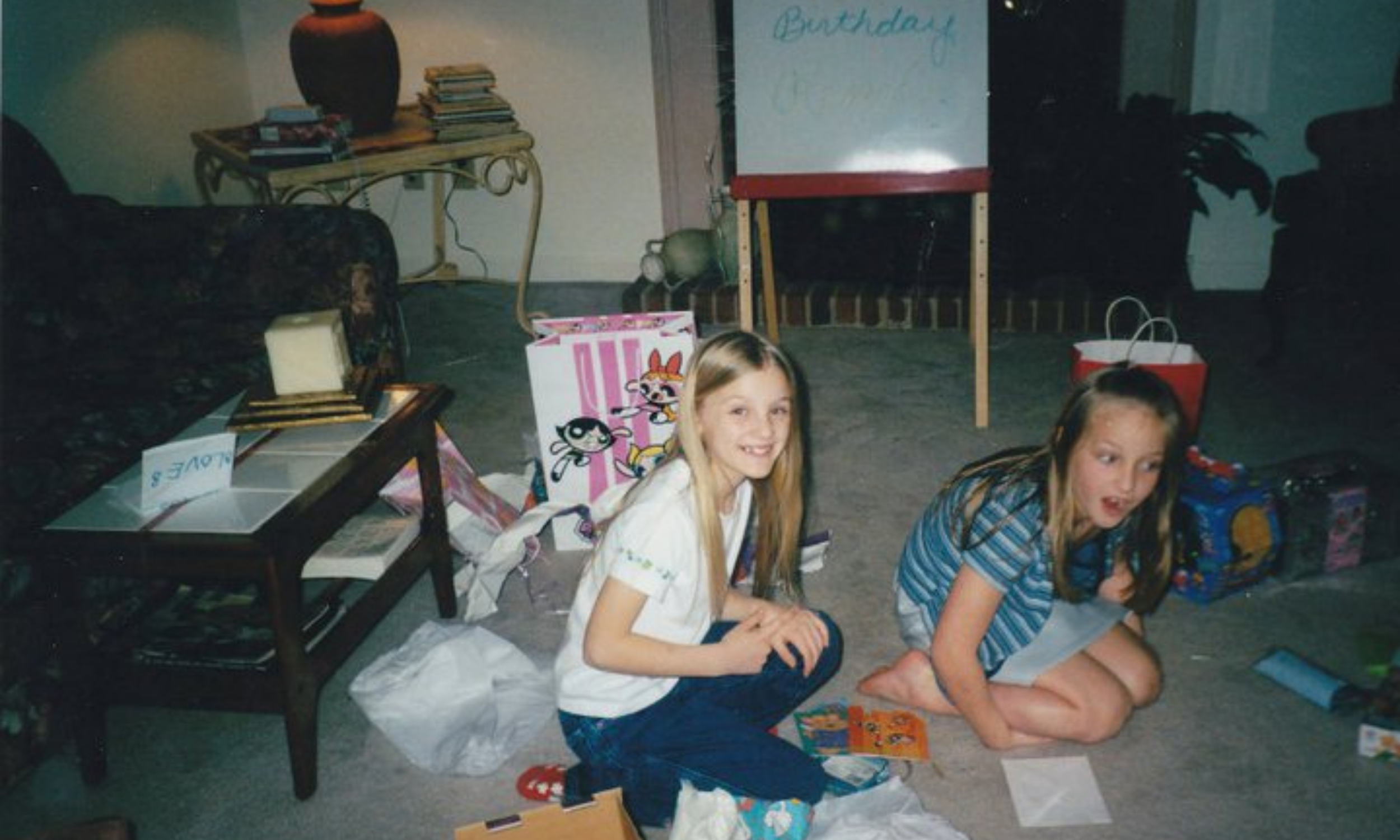
me and my childhood best friend at my birthday party
You Don't Need a Best Friend. You Need a Village.
The Harvard Study of Adult Development highlights that social connections are the most important factor in long-term happiness. Social connections are the relationships, bonds, and interactions that link individuals, fostering a sense of belonging, understanding, and shared experiences. The CDC refers to social connections as the degree to which you have the number, quality, and variety of relationships that you want, when you feel like you belong and have the support and care that you need.
We don't just need best friends. We need a village.
My current hyperfixation is Best Medicine, and it's not just the coastal Maine setting of Port Wenn — though that didn't hurt. It's the relationships. Nobody in that town is anybody's best friend, but everyone belongs to everyone a little bit. That's the village. Not one person who holds everything, but a whole cast of people who each hold something.
That's what the research is actually pointing to. Not find your person. Build your cast.
I went into March thinking I needed to build something big. But research shows that healthy connections aren't just about depth, they're also about frequency and warmth.
What I actually found was that I'd been dismissing what was already there.
A third space is anywhere that isn't home and isn't work. The pottery studio. The hair salon. The coffee shop you return to every Saturday. Places where you keep showing up, and so does someone else.
My hairdresser and I are the same age, same energy, same humor, and every time I leave I think, why don't we just go get a drink sometime. In our cul-de-sac, we offered our old living room couch to a neighbor and moved it together with the help of the person across the street. A quick 20-minute phone call with my friend in London, and I rode high for the rest of the day. My friend flew across the country to visit, and then we drove four hours round-trip to surprise another friend at her baby shower. When I walked back into pottery after missing a few sessions, my instructor hugged me and said, "I'm so glad you're back, we missed you."
I had been undervaluing what was already there. This is my village.
How I Stopped Discounting the Connections I Already Had
I always thought something was wrong with me because I never had the type of best friend you see in the media growing up. I remember crying to my parents about not having a friend group, wondering if people actually liked me. That wound is still there. But maybe the question was never how to find a BFF. Maybe it's learning how to stop discounting what's already there.
Connections aren't just about depth. They're about warmth and frequency.
Here are some ways I'm planning to add more of both (and maybe it will inspire you to).
Got leftover desserts? Package them up and leave them with a neighbor.
Growing cut flowers? Bundle a few stems and leave them outside for anyone to take.
Heading to your hair appointment? Bring your stylist a coffee.
A memory or photo pop up on your timeline? Send it to the person in it.
Something remind you of a friend? Send the photo, the reel, the random thing.
Have five minutes? Send a voice memo instead of a text.
Regular at the same class, gym, or studio? Ask how their project, race, or thing went.
Know your neighbor's name but not much else? Introduce yourself properly.
Garden overflowing with tomatoes or cucumbers? Leave a bag on someone's doorstep.
Want to catch up but don't have the time for a call? Write a handwritten letter.
Friend going through something hard? Drop off a meal, no invite required.
Sitting in a coffee shop regularly? Learn the barista's name.
Thinking of a friend? Send a little something via Venmo just because.
The village was never something I had to build. I just had to stop walking past it.
