
The Science of Feeling Good: A D.O.S.E of Joy
Joy isn't a personality trait or a lucky accident, and almost every good feeling you've ever had — motivation, warmth, calm, ease, pleasure — can be activated. It's four brain chemicals, and science tells us exactly how to trigger them. They're called dopamine, oxytocin, serotonin, and endorphins. Together they're called D.O.S.E.
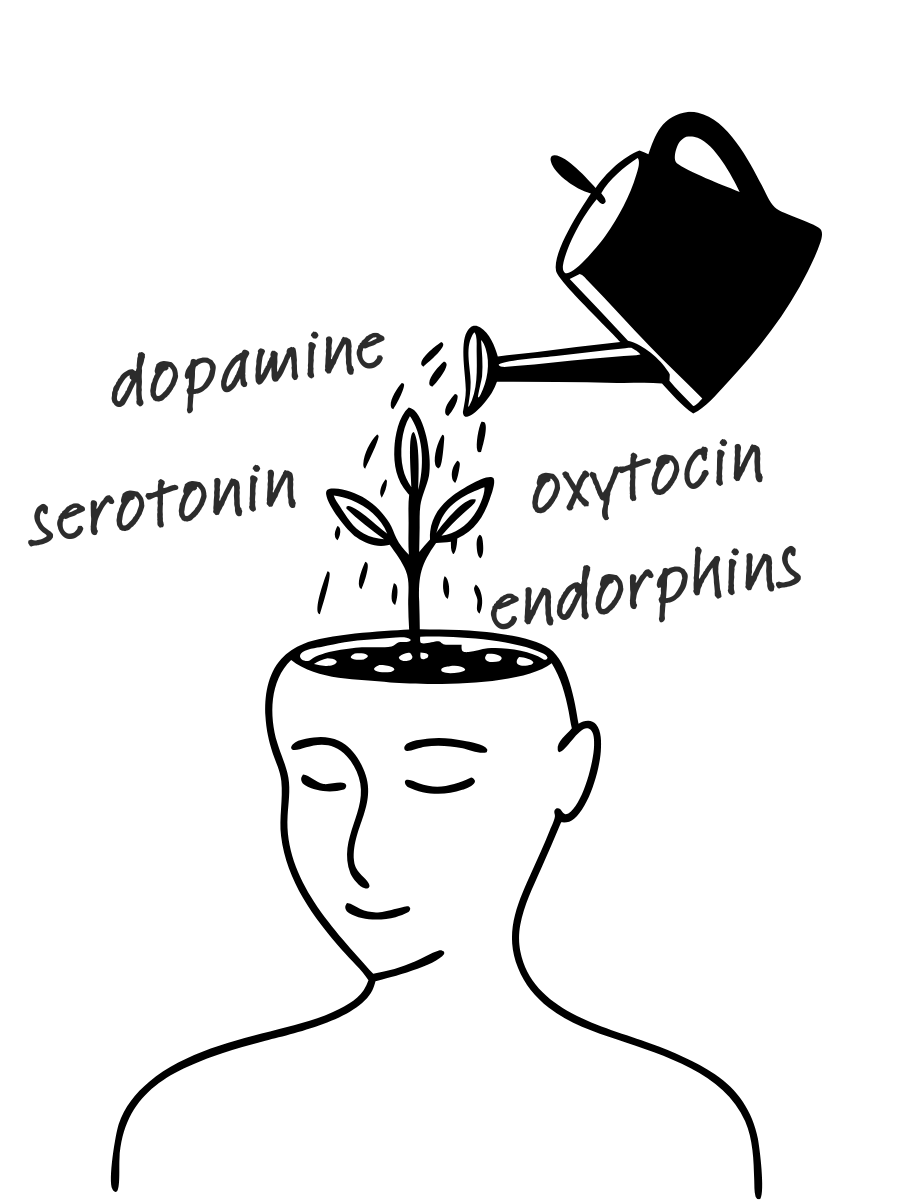
Here's what's wild: none of them just happen. They all have specific triggers. And most of us are accidentally starving ourselves of them because nobody taught us what actually turns them on. This is that guide. Every single thing on this list has a research study behind it. None of it is a vibe (but you can certainly make it one).
Does any of this sound familiar?
Mornings in a haze. Two coffees on an empty stomach. Half an hour of scrolling even though your journal is sitting right there on the table. Rushed out the door, eating heavy carbs, movement pushed to "maybe later this week." A sad desk salad at lunch because #health. The 2pm crash. The desperate second caffeine hit. Home, dinner, TV, bed, repeat.
It isn't a bad life. But it isn't a joyful one either.
That was me, not so long ago. Even now, I'm still figuring it out — adding things in, noticing what shifts, unlearning the idea that feeling good is something you earn after you've gotten everything else right.
Last week, I walked outside first thing in the morning, no phone, no coffee yet, just stood in the sun for a few minutes. And something actually lifted. I felt it. So I went looking for why and fell down a rabbit hole of neuroscience and joy research that became this post.
Turns out we're all just flowers. We need light. We need the right conditions. And most of us have just been trying to bloom in the dark.
Here's what the science actually says.
The Four Systems of Feeling Good: Dopamine, Oxytocin, Serotonin, Endorphins
Joy is not a single chemical. It's four of them and each one needs something different to show up. Together they're called D.O.S.E.: dopamine, oxytocin, serotonin, and endorphins. Here's what each one actually does, what kills it, and what turns it back on.
Dopamine: the "I want to do this" feeling
Dopamine is less about pleasure and more about pursuit. It's the chemical that makes you feel motivated, focused, and driven toward something. It spikes in anticipation of a reward, not just when you get one (which is why the planning of a trip often feels as good as the trip itself).
What depletes it: endless scrolling, never finishing anything, chronic stress, and too much novelty with no payoff.
What triggers it: completing a task — even a small one, music you love, movement, and working toward something that actually means something to you.
Oxytocin: the "I'm not alone" feeling
Oxytocin is the connection chemical. It's released through genuine human warmth — a real conversation, eye contact, physical touch, cooking for someone, being truly seen by another person. It's why you feel physically calmer after a good phone call with someone you love, your nervous system actually settles.
What depletes it: isolation, surface-level interactions, and too much time spent in parasocial relationships (consuming content as a substitute for real connection).
What triggers it: a hug, a real conversation, doing something kind for someone else, even petting an animal. It doesn't take much. It just has to be real.
Serotonin: the "I'm okay" feeling
Where dopamine is the driver, serotonin is the stabilizer. It's the quiet background hum of feeling content, grounded, and like things are basically fine. About 90% of your serotonin is made in your gut — which means what you eat genuinely affects your mood, not metaphorically, literally.
What depletes it: low sunlight, low movement, poor sleep, and a diet that doesn't give your gut what it needs to do its job.
What triggers it: morning light, exercise, eating protein (it's made from an amino acid called tryptophan that comes from food), and feeling significant to someone, aka being appreciated, being seen, mattering to another person.
Endorphins: the "ahhh" feeling
Endorphins are your body's natural pain buffer and ease-maker. They're released during sustained physical effort, deep laughter, and creative absorption. This is what makes a long run feel euphoric (yeah, runner’s high is real), what makes a really good laugh with a friend feel almost physical, and what makes getting lost in a creative project feel so satisfying you don't want to stop.
What depletes them: sedentary days, chronic low-grade stress, and not making things.
What triggers them: movement that lasts long enough to feel like effort, genuine laughter (a real, full-body laughing), and making something with your hands.
If you feel like you are often in a slump, it means one or more of these have gone quiet. So here’s how you can improve your morning routine.
Your Science-Backed Perfect Day, Hour by Hour
You don't need to overhaul your life. You need a few things done consistently, in the right order.
Morning: step outside within the first few minutes of waking, no sunglasses. Ten minutes is enough. This is the cheapest, fastest mood reset available to you, and it's free.
Midday: when the 2:30pm slump hits, don't fight it with more coffee. Take a walk or rest for ten minutes. It's not weakness, it's biology, and working with it means the rest of your day (and tomorrow) goes better.
Evening: put the phone away for dinner. Cook slowly if you can. Eat without scrolling. This is one of the simplest ways to actually taste your food again, and it does more for your nervous system than you'd think.
I made a longer version of this for myself, and I want you to have it.
It's called the D.O.S.E. Joy Day Guide. It breaks down every block of the day in detail — what to do, why it works, who the research comes from, and a plain-English version of it (cause sometimes we just need that). It’s ten simple tips you can easily implement into your day.
No complicated protocols. No expensive supplements. Just your brain, what it actually needs, and a day designed around that.
Get the D.O.S.E. Day Guide for FREE. Just enter your email below and confirm your subscription (double-check your spam folder, just in case)
Joy Is Not A Destination
Every single thing on this list is a choice available to you today, in your current life, with what you already have. The research doesn't say you need to be somewhere else, earn something different, or become a different person. It says: go outside in the morning, move your body, eat protein, do one thing at a time, connect with a human, find one moment of awe, and go to sleep at the same time you did yesterday.
